
Documented history
Historic Centre of Santa Cruz de Mompox
A colonial river town built with the Magdalena, not away from it
Mompox grew as a strategic river port linking Cartagena and the Caribbean with the interior of New Granada. Its commercial decline in the nineteenth century helped preserve an exceptional urban fabric that UNESCO inscribed as World Heritage in 1995.
From river settlement to strategic port
The history of Mompox begins before the Spanish town. The Momposina Depression was inhabited by Indigenous communities adapted to rivers, wetlands and floodplains. When the Spanish established Santa Cruz de Mompox around 1540, they selected a site on one of the most important transport corridors in northern South America.
The Magdalena River turned the town into a logistics and commercial hub. Goods, precious metals, travellers, officials and news moved between Cartagena and the interior along the river. UNESCO identifies this role in communication and trade from the seventeenth to the early nineteenth century as a central part of the town's historical importance.
Port activity attracted merchants, religious orders and skilled trades. Houses, churches, convents, workshops and commercial spaces accumulated over generations, creating the historic centre that survives today.
An urban form shaped by the river
Mompox did not develop around a single central square in the same way as many Spanish-American towns. It grew lengthwise along the Magdalena. UNESCO highlights three squares aligned along the river, each historically associated with a church.
La Albarrada is essential to this story. The riverside street also functioned as a defensive embankment against floods. Over time it became a commercial, residential and civic edge where shop-houses, arcades and river activity met.
Private houses were commonly organised around courtyards, with shaded galleries, thick walls and transitional spaces that responded to the hot climate and to the needs of family and commercial life.
Prosperity, independence and commercial decline
Mompox prospered through river trade, regional ranching, goldsmithing and craft production. Legal commerce and smuggling both benefited from a complex river system that was difficult to control completely.
The town also played an important role in the political crisis that led to independence. Academic research has shown that the events of 1810 were more complex than simplified heroic narratives, involving disputes with Cartagena, local factions and changing loyalties.
During the nineteenth century, changes in the Magdalena system reduced the importance and navigability of the Mompox branch while the Loba branch gained flow. Commercial traffic shifted toward Magangué, and Mompox entered a long period of relative isolation.
Isolation, preservation and World Heritage
Economic decline brought hardship, but it also reduced the pressure to replace older buildings with modern development. UNESCO considers this relative isolation one reason the town retained such a high degree of authenticity.
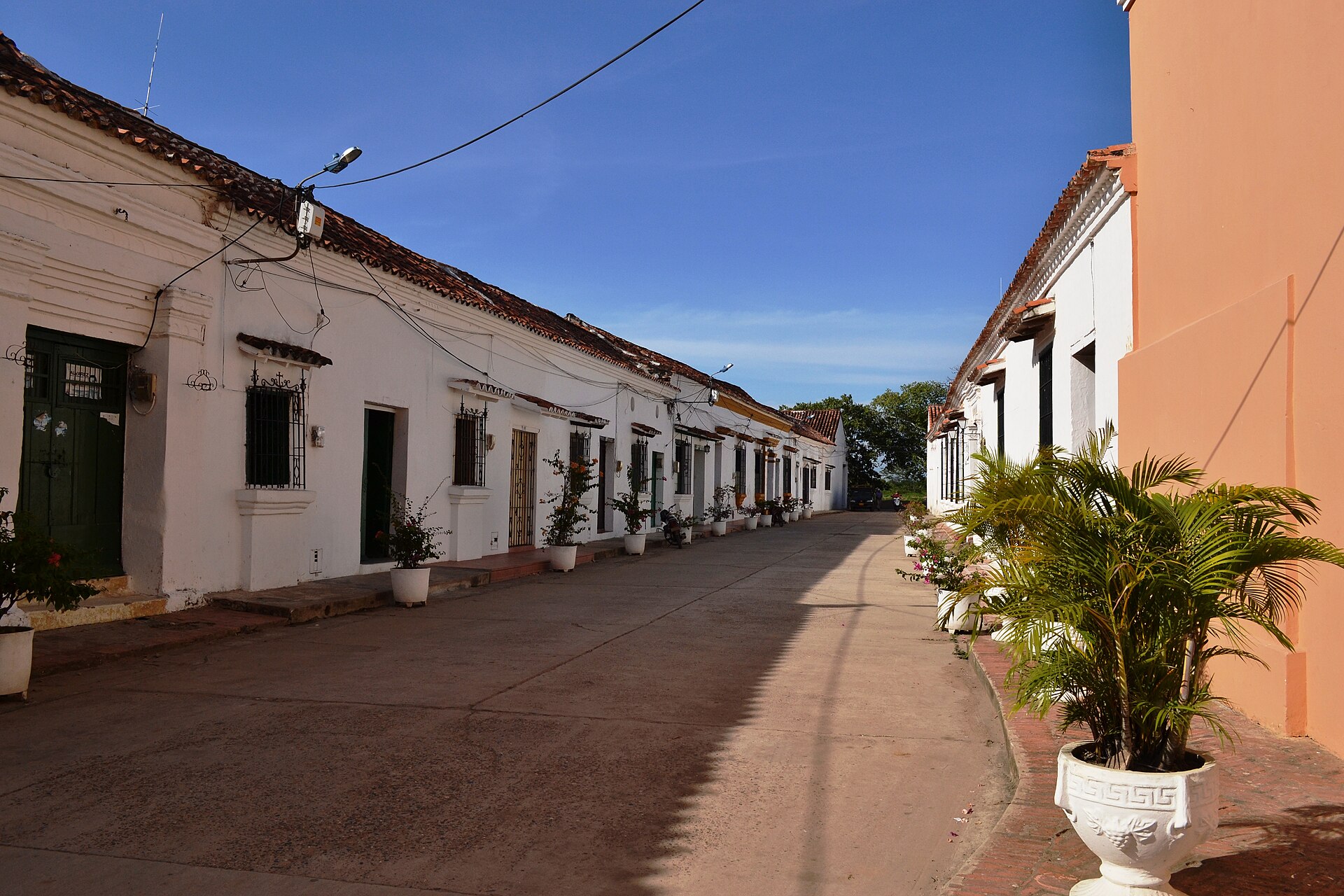
The original street pattern and a large proportion of seventeenth-, eighteenth- and early nineteenth-century buildings survived. Many houses remained homes, churches remained active and the scale of the streets changed less than in many other colonial centres.
The historic centre was protected nationally in 1959 and inscribed on UNESCO's World Heritage List in 1995. Its value lies not in a single monument but in the relationship between streets, squares, houses, churches, courtyards and the river.
Photos


Sources
This article is based on institutional and academic sources. Where documentation is uncertain, the text avoids turning assumptions into historical facts.