
Documented history
Mompox filigree
From a port handling precious metals to a craft that became an emblem of the town
Filigree developed within a river port where precious metals, goldsmiths, religious commissions and commercial networks met. Over time it became the jewellery technique most closely identified with Mompox.
Why Mompox became a town of goldsmiths
Mompox was not located beside a major mining district, yet its strategic port position meant that boats carrying precious metals passed through the town on the way toward Cartagena. Artesanías de Colombia explains that this circulation created favourable conditions for metalworking and jewellery.
Religious institutions also generated demand for crosses, chains, rosaries and liturgical objects. Gold and silver work therefore developed within a broader urban economy of merchants, churches and specialised craftspeople.
Several techniques coexisted, including hammering, stamping and die work. Filigree gradually gained importance rather than existing as the only local technique from the beginning.
How filigree became dominant
Research presented by Artesanías de Colombia shows that filigree could first appear as detail within larger pieces. It allowed crosses and rosaries to be lighter than fully hammered objects while still creating rich visual detail.
Because the technique can produce volume and complexity with relatively little precious metal, it also offered economic advantages. Over time these qualities helped filigree displace some heavier techniques and become the signature jewellery practice of Mompox.
Its history is therefore both aesthetic and practical: skill, material efficiency, religious demand and commercial opportunity all contributed to its success.
Working metal like thread
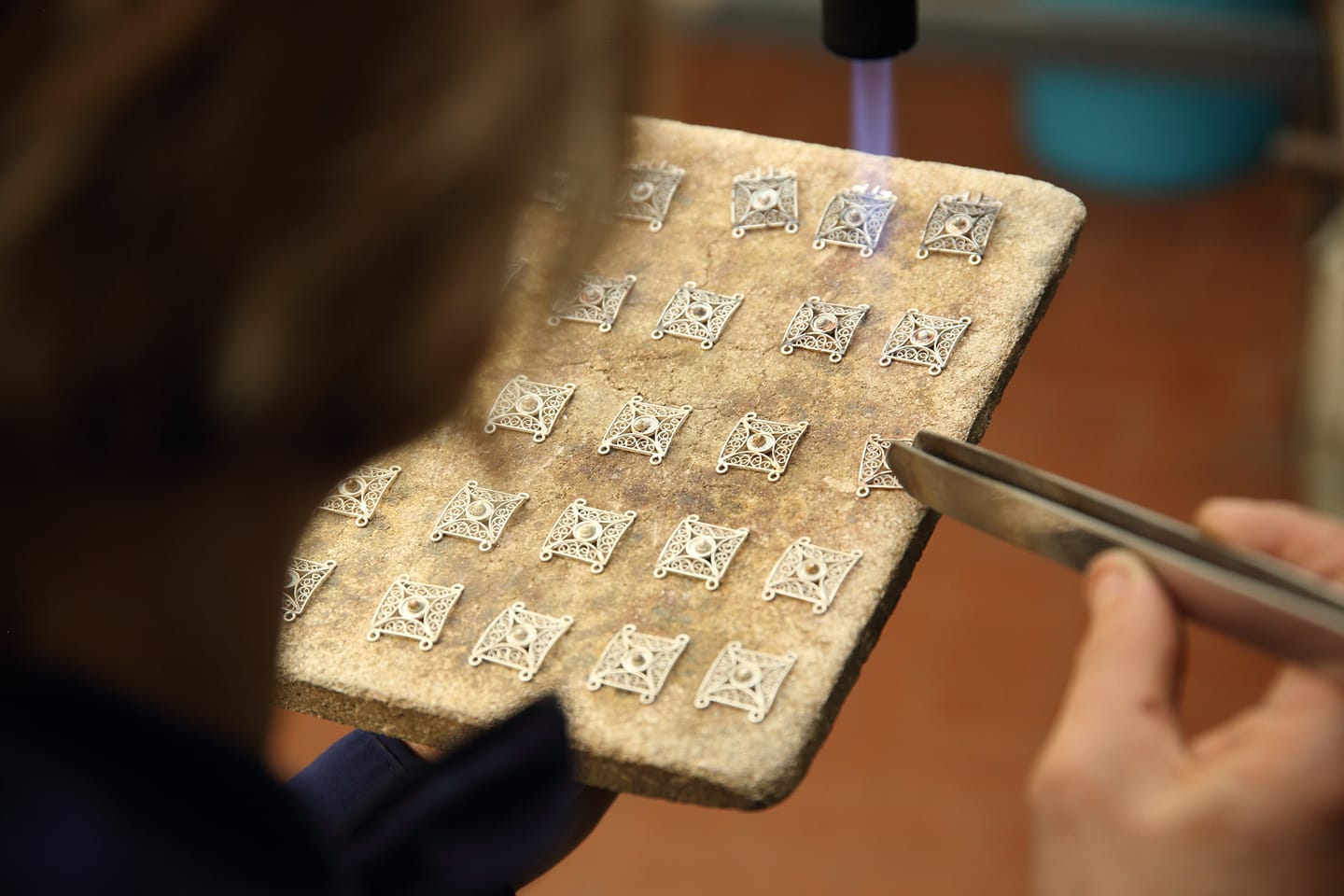
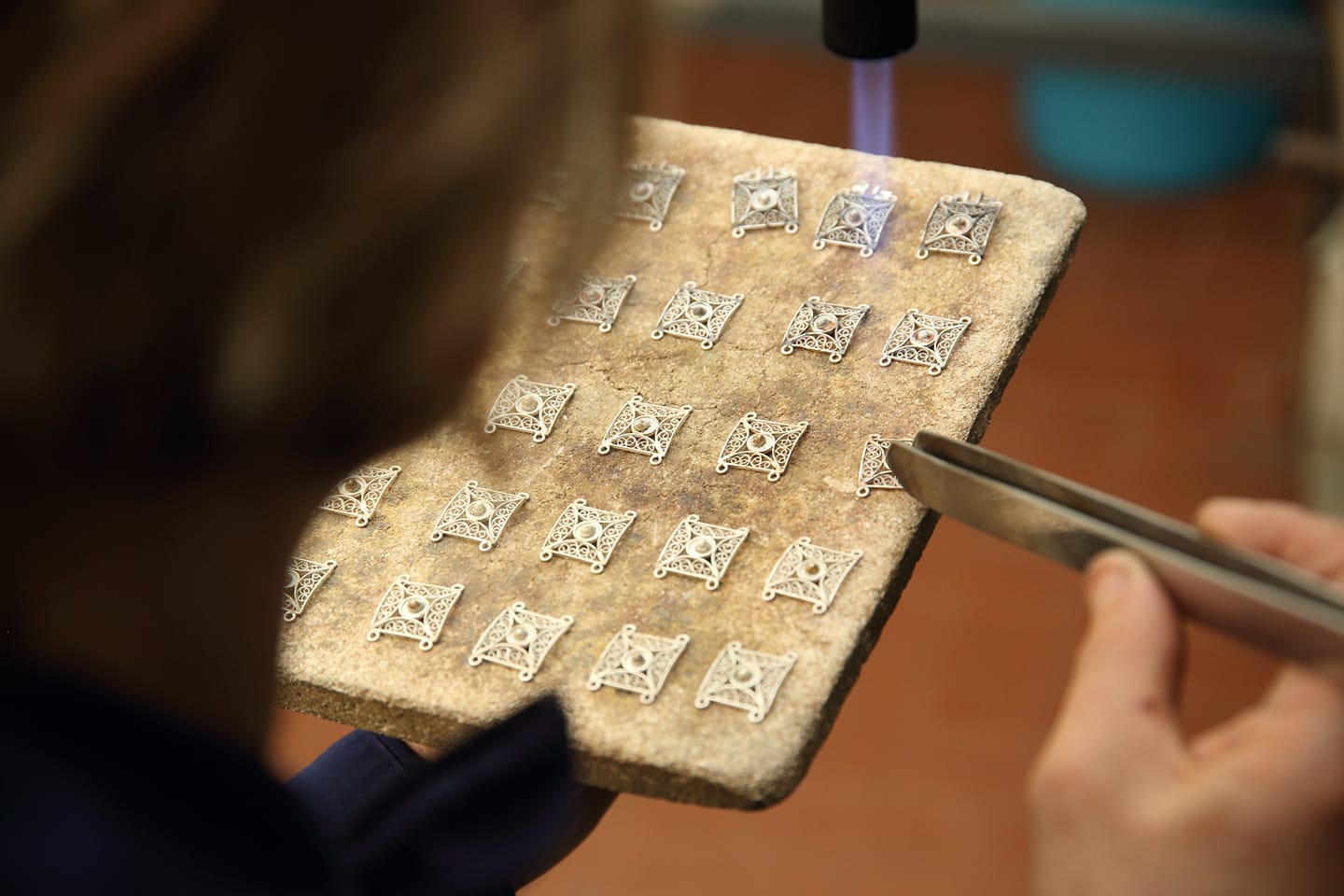
The visual character of filigree comes from turning gold or silver into extremely fine wire. The wire is twisted, coiled and fitted inside a supporting frame to create dense patterns of line and open space.
The process demands precision in tension, fitting and soldering. A finished piece may look light and effortless, but it is built from repeated small operations in which too much heat or pressure can damage earlier work.
Much of this knowledge is transmitted in workshops and families. The craft depends on practice and on learning how metal behaves, not only on written instructions.
A living craft
Religious motifs, plant forms, geometric patterns and animal figures all appear in Mompox jewellery. Artesanías de Colombia highlights the articulated fish as one especially representative piece, a fitting symbol in a river town.
Today filigree remains an active economic and cultural practice. Artisans continue to make, teach and sell jewellery in Mompox, while fairs and cultural events have created wider markets.
Understanding filigree means connecting craft to the river port, precious metals, religion, commerce and manual knowledge. It is not a frozen colonial relic but a tradition that has continually adapted.
Photos
Sources
This article is based on institutional and academic sources. Where documentation is uncertain, the text avoids turning assumptions into historical facts.